Coffee · Dialogues Coffee
Written at the pace of the space itself: best read slowly, over a coffee
192 Rue de Grenelle, 75007 Paris
I was not planning to stop. I was moving the way you move on a Paris morning when the city has already decided your pace for you, with the current, without thinking about it. And then I saw the window of Dialogues Coffee on Rue de Grenelle, and something in me stopped before the rest of me did. A coup de cœur. I had not expected it. I pushed open the door.
The walls are white. Not the white of an office or a gallery, but the white of good paper: warm, luminous, the kind of white that makes you want to add something to it. White lines run along them like ruled pages. The furniture is dark wood, the colour of ink. The surfaces catch the light in a way that rewards looking twice. I stood in the doorway for a moment, taking it in, before I noticed that I had already decided to stay.
Dialogues was thought of as a poetic and warm place, which invites you to slow down and let yourself be swept up by the beauty of the details. Each visit becomes a new page, written by those who linger there.
Mathilde, the founder, is behind the counter. She is calm in the specific way of people who have found what they are for: entirely present, entirely unhurried. She greets me with the naturalness of someone who means the welcome. She makes me an espresso and I watch her do it: not a performance, not a demonstration. She is making this coffee the way you make something for a person you are glad to see. She hands me the cup. It is small, slightly worn, warm in both hands. I will only learn later what it carries.
She spent six years in private equity before she built this, a world of precision and pressure that she found genuinely interesting. The dream of building her own business had been there since university; an entrepreneurship course lit it, and it burned patiently for years until she was ready. The question was always what, and the answer came from a feeling: she had been having a coup de cœur for coffee shops since the years she was going to them on weekend mornings with her closest friend. Those hours (somewhere beautiful, unhurried, safe, the particular ease of being with someone you love without the city requiring anything of you) were the feeling she wanted to give people. She built a space around a feeling she had already loved for years.
I had a coup de cœur for coffee places. I wanted to create my own: something really aesthetic, really beautiful, where you feel safe. Cosy, not too big. A place where you could take your time.
Her grandparents ran a hotel-restaurant their entire lives. They worked incredibly hard. She says this with the warmth of someone who witnessed it up close and understood, even as a child, what it meant to build something for other people and give it everything. They were her example: not just of hard work, but of the rarer belief that a place made with genuine care carries a value that cannot be measured in the ordinary ways. Dialogues is her tribute to them. Un hommage. And the tribute is not abstract: it is physical, daily, held in the hands of every person who orders an espresso here. The cups on the counter are the same cups from their establishment. She brought them with her. She uses them every day. The love is in them before you know to look for it.
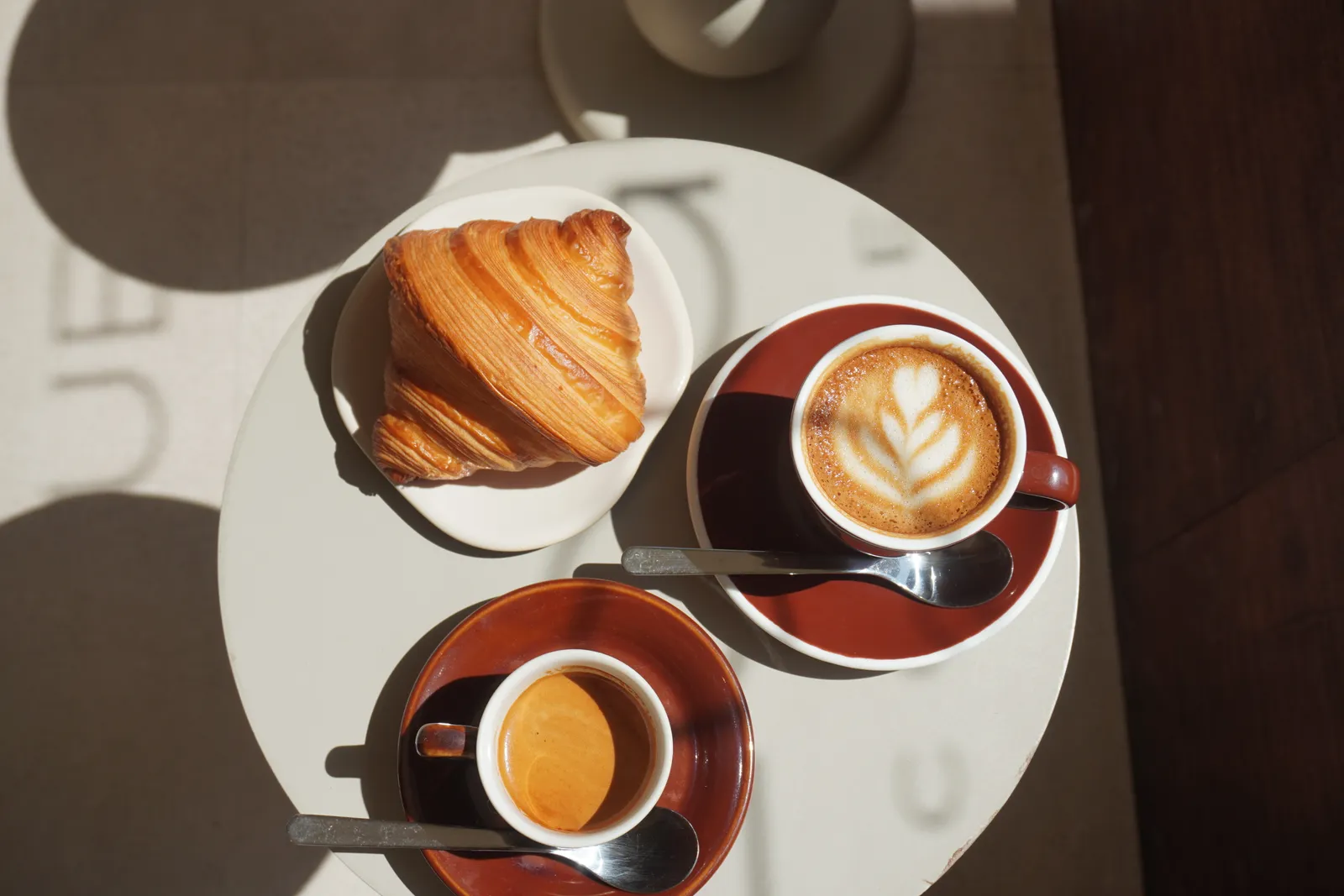
I ask her what has stayed with her most since opening. She tells me about the customer who comes before his Italian class every week, who has made the visit a ritual of settling himself before the lesson begins. The couple with their croissants: same table every week, very quiet together, the kind of quiet that belongs to people who no longer need to fill silence. And the Canadian entrepreneur who came every day for a week with his whole family, asking careful questions about the coffee, who said at the end of the week that this place was a coup de cœur for him, and coming from someone who understood what went into it, that landed as a compliment of the deepest kind. The intention was not just made visible. It was felt.
There is a couple who come every week. Same table, their croissants. Very quiet together. Very beautiful. They have made this their ritual. That is exactly what I built this place for.
I kept coming back. The first time for a coffee. The second with my notebook. The third time I took my coffee outside and sat on the bench and let the street move past me while I sat perfectly still. Eventually I came because it had become part of how my days were shaped, the way a walk becomes a route and a route becomes a ritual. My phone stays face-down on the table here without my deciding to put it there. The pages in my notebook fill faster here than anywhere else. Something about the space returns you to yourself without making a fuss about it.
This is what Mathilde meant when she said she wanted a place where you could take your time: not just to sit, but to return to yourself. To read, to write, to talk to someone you love without the city pressing at the edges. The details were chosen to be discovered slowly. The whole space was built for people who want to linger, and who, if they linger long enough, will notice the pearlescent glow on the counter, will feel the weight of the espresso cup, will realise, the way you realise something important, that they are holding something made with more care than they expected.
She called it Dialogues because every visit is a conversation: between you and the space, between the coffee and the morning, between who you were when you arrived and who you are when you leave. The walls are still blank when she opens every morning. By the time she closes, they are full.
She didn't open a coffee shop. She kept a promise. To her grandparents. To the feeling she had been in love with since those weekend mornings. To everyone who will walk in from the city, stop, and feel, before they can explain it, that they were supposed to come here. Come back tomorrow. The page is still being written.